Most people in Dubai never think about their water tank cleaning until the water itself gives them a reason to. A faint smell when you fill a glass. A cloudy tinge after the shower’s been running a minute. A taste that’s not quite right, even though nothing’s “wrong” with the plumbing. That’s usually the tank talking, not the pipes.
Unlike a lot of countries where water runs straight from the mains to your tap, most Dubai homes — villas especially — store water in a tank first, then pump it through the house. It’s a smart system for a desert city, but it comes with one condition attached: that tank has to be cleaned, or everything sitting inside it eventually ends up in your morning coffee.
Here’s what actually goes on inside these tanks, how often they genuinely need attention, and what to expect if you’re booking a cleaning for the first time.
Why Dubai Water Tanks Get Dirty Faster Than You’d Think
Water tanks aren’t sealed vaults. They have vents, inspection hatches, and connection points, and Dubai’s climate finds its way through every one of them.
Heat is the main driver. A rooftop or ground-level tank sitting in direct sun for months warms the water inside it, and warm standing water is exactly what algae and bacteria need to establish themselves. Add in the dust that blows through every gap and settles as fine sediment, and within a few months you’ve got a layer of grime building along the base and walls that no amount of filtering downstream will catch.
Concrete tanks are worse for this than plastic ones — the porous surface gives algae something to grip onto, which is part of why Dubai Municipality guidance leans toward more frequent cleaning for concrete storage. Plastic tanks with a tight-fitting lid hold out a bit longer, but “longer” still isn’t “never.”
Signs Your Tank Needs Cleaning Now, Not Next Month
A few things tend to show up before anyone actually books a cleaning:
- Water looks slightly yellow, brown, or cloudy — usually rust or sediment stirred up from the tank floor
- A musty or earthy smell when you run the tap, especially first thing in the morning
- An odd taste, even though DEWA-supplied water itself is fine before it reaches your tank
- Visible slime or algae around the tank’s inspection hatch or overflow pipe
- Reduced water pressure — sediment can partially block the outlet or foot valve
If any of these sound familiar, it’s worth booking a cleaning rather than waiting for your next scheduled service. Dirty water sitting in the tank doesn’t fix itself — it just gets more concentrated the longer it’s left.
What Actually Happens During a Professional Cleaning
This isn’t a five-minute hose-down. A proper water tank cleaning and disinfection service in Dubai follows a fairly consistent process across reputable providers, and it’s worth knowing what you’re paying for:
- Inspection first. The technician checks the tank’s condition, the float valve, the foot valve, and the suction pipes before doing anything else.
- Full drain. All existing water is pumped out — this is why we recommend cutting supply 24–48 hours ahead, to run the tank down and reduce waste.
- Scrubbing. The interior walls and floor get manually scrubbed to remove sediment, algae, and biofilm that’s built up on the surface.
- Disinfection. Municipality-approved chemicals are used to kill any remaining bacteria — this step is what separates a proper cleaning from a rinse.
- Rinse and drain again. The tank is flushed thoroughly so no cleaning residue ends up in your water supply.
- Refill and final check. Once refilled, the technician checks the float valve is regulating properly and there’s no leak at the connections.
Most standard residential tanks take one to two hours from start to finish, sometimes closer to four if it’s larger or hasn’t been cleaned in a while.
How Often Should You Really Do This?
Dubai Municipality’s general guidance is at least once a year, with twice a year being the more commonly recommended interval for villas — and that’s the number most maintenance companies, us included, work to as a default.
A few things push that timeline shorter:
- Concrete tanks — every 3 to 6 months is safer given how much easier algae takes hold
- Recent dust storms or construction nearby — more airborne dust means faster sediment buildup
- Any visible sign from the list above — don’t wait for the “scheduled” date if the water’s already telling you something
If your tank is plastic, well-sealed, and you’re not seeing any warning signs, sticking closer to the twice-a-year mark is usually enough.
What It Costs in Dubai (2026)
Pricing depends on tank size, material, and how overdue the cleaning is, but here’s a realistic range:
| Service | Typical Cost (AED) |
|---|---|
| Standard residential tank cleaning | 300 – 800 |
| Cleaning plus full disinfection | 500 – 1,200 |
| Larger villa tanks / multiple tanks | 800 – 1,500+ |
| Water pipeline disinfection (add-on) | 200 – 400 |
| Optional lab testing (TBC / Legionella) | Varies by lab, usually quoted separately |
If a quote seems unusually low, ask what’s actually included — a genuine clean covers draining, scrubbing, disinfection, and a final rinse, not just skimming debris off the surface.
Why This Isn’t Just a “Nice to Have”
An unclean tank isn’t just a smell-and-taste issue. Stagnant, contaminated water is a documented route for waterborne illness, and prolonged exposure can also aggravate skin conditions and irritate hair and scalp — something a lot of people never connect back to their water tank. On the property side, sediment and biofilm buildup can accelerate corrosion inside metal fittings and clog the float or foot valve, which turns into a plumbing call-out on top of the tank issue.
This is exactly the kind of problem that’s cheap to prevent and annoying to ignore. A AED 300–800 cleaning now is a lot less than dealing with a corroded tank fitting or a full plumbing repair later because sediment finally worked its way into your pipework.
Don’t Just Clean the Tank — Check What’s Downstream Too
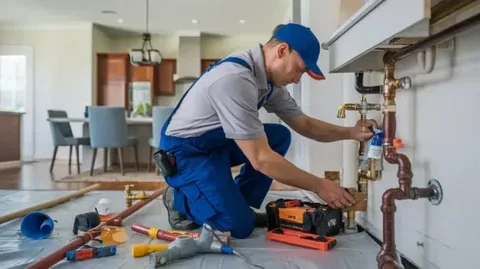
A clean tank feeding into old, scaled-up pipes only solves half the problem. If your water still looks or smells off after a cleaning, the issue may be further down the line — worth having a broader look at your home’s plumbing system at the same time, especially if the property is older or hasn’t had a full plumbing inspection in a while. And if you’re noticing rust-colored water specifically from the hot tap, that’s often your water heater rather than the tank — worth ruling out separately.
How We Handle It at Green Grove
We follow the Dubai Municipality-approved process from start to finish — full drain, manual scrub, chemical disinfection with approved agents, thorough rinse, and a final check of your float valve and fittings before we leave. We’ll also flag anything else we notice while we’re up there — a slow leak at the overflow pipe, a valve that’s not seating properly — because most tank problems are cheaper to fix while someone’s already on the roof than to schedule as a separate visit.
If you’re due for a cleaning, want to get on a twice-yearly schedule, or you’ve just noticed something’s off with your water, we’re happy to come take a look. It’s also worth folding this into a broader annual maintenance plan if you’d rather not have to remember to book it yourself every six months.
Frequently Asked Questions
How long does water tank cleaning take? Most residential tanks take one to two hours. Larger villa tanks, or ones that haven’t been cleaned in over a year, can take closer to four.
Is water tank cleaning required by law in Dubai? Dubai Municipality requires residential water tanks to be cleaned at least once a year, and recommends twice a year for most villas. Municipality-approved companies follow set disinfection standards during the process.
Can I clean my own water tank? It’s technically possible for a small, easily accessible tank, but confined-space entry, proper disinfection chemicals, and correctly reassembling the float and foot valves are easy to get wrong without training — which is part of why professional cleaning is recommended over DIY.
Will cleaning my tank fix low water pressure? Sometimes — if sediment was partially blocking the outlet or foot valve. If pressure is still low afterward, the cause is more likely further down the plumbing line and worth a separate inspection.