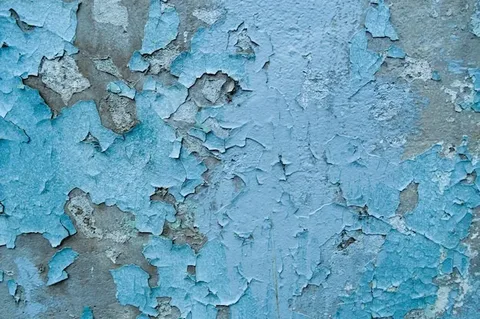
Peeling paint in a Dubai home is one of the most misunderstood maintenance problems there is. Most people see it and call a painter. The painter scrapes it back, applies a coat or two, charges AED 500, and leaves. Within three to six months, the same patch — or a worse one — is peeling again.
This cycle repeats because paint peeling in Dubai is almost never a painting problem. It is a symptom. The paint is the messenger. And if you keep shooting the messenger without understanding the message, you will be repainting the same wall every year for the rest of the time you live there.
This guide explains every cause of paint peeling in Dubai homes, what each type of peeling actually indicates about your property’s condition, and what the correct fix looks like — not the cosmetic one, the real one.
Why Dubai Is Particularly Harsh on Paint
Before diving into specific causes, it helps to understand why paint fails faster in Dubai than in almost any other city on earth.
Dubai’s climate creates a combination of stresses that very few paint systems are designed to handle simultaneously:
Extreme UV radiation. Dubai receives intense direct sunlight for the majority of the year. UV breaks down paint binders — the compounds that hold pigment to the wall surface — faster than almost any other environmental force. Exterior paint that might last 8–10 years in a European climate may show UV degradation in 3–5 years in Dubai.
Extreme heat. Surface temperatures on south and west facing exterior walls in Dubai regularly exceed 60°C in summer. This causes paint films to expand, contract, and eventually lose adhesion to the substrate beneath.
Humidity cycling. While Dubai is generally arid, it experiences periods of significant humidity — particularly in autumn and early spring. This humidity cycling means walls absorb and release moisture, causing expansion and contraction that stresses the paint film from below.
Sand and dust. Fine particulate matter from sandstorms and general construction dust in Dubai penetrates tiny surface cracks and works its way under paint layers, accelerating delamination.
Desalinated water. Dubai’s tap water is highly processed and contains mineral profiles that leave heavy scale deposits on surfaces. This affects wet areas — kitchens, bathrooms, laundry rooms — where water contact is frequent.
Understanding these factors matters because the solution to paint peeling in Dubai is almost always a combination of fixing the underlying cause and then using the correct paint system for Dubai’s specific conditions — not just slapping on another coat of whatever was there before.
Cause 1: Hidden Plumbing Leaks Behind the Wall
This is the single most common cause of recurring paint peeling in Dubai apartments and villas — and the one most frequently misdiagnosed.
When a plumbing pipe behind a wall develops a slow leak, the water does not immediately flood the room. Instead, it migrates through the wall structure, saturating the render and the gypsum plaster beneath your paint. The moisture then works its way to the surface, and as it does, it pushes the paint film outward, causing bubbling first, then peeling, then in more advanced cases, visible water staining or efflorescence — the chalky white mineral deposits that appear on walls as moisture moves through.
What it looks like: Localised bubbling or peeling, usually in irregular shapes rather than straight lines. Often damp to the touch. May have a yellowish or brownish discolouration beneath the lifted paint. May get worse in hot weather as the trapped moisture expands.
Where it appears: On walls adjacent to wet areas — bathrooms, kitchens, laundry points. On walls shared with neighbouring units. Near the floor on ground floor apartments. Near the ceiling on apartments with units above.
What it is NOT: A painting failure. No amount of repainting will fix this. Until the plumbing leak is identified and repaired, the paint will always fail.
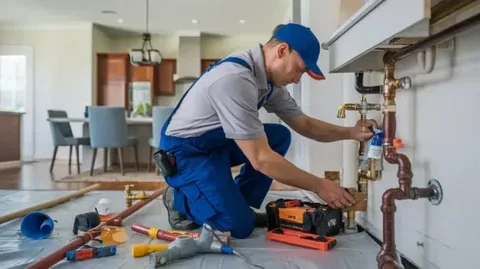
The correct fix: A licensed plumber needs to locate and repair the source of moisture. In Dubai, this often involves pressure-testing the water supply lines and inspecting junction points in the walls. Once the source is repaired and the wall is allowed to dry completely — which can take several weeks for a saturated gypsum wall — the affected plaster may need to be replaced before repainting.
This is why at Green Grove Maintenance, we always send our plumbing team to assess paint peeling cases before we send a painter. Painting over a hidden leak is one of the most expensive mistakes a Dubai homeowner can make.
Cause 2: AC Condensation and Drainage Problems
Air conditioning systems in Dubai run almost continuously for six to eight months of the year. This makes them a significant source of moisture — and a common cause of paint peeling that is entirely unrelated to the painting itself.
There are two distinct ways that AC systems cause paint failure:
Condensate drain line leaks. Every split AC unit has a condensate drain line that removes the water produced by the cooling process. These lines run through walls and ceilings to discharge points, typically through an exterior wall or into a shared drainage system. When these lines become blocked — usually from algae growth, debris, or poor installation slope — water backs up and overflows, saturating the wall or ceiling around the unit.
What it looks like: Peeling or water staining immediately around or below the indoor AC unit. Often accompanied by visible water marks running down the wall. May have a slightly grey or greenish tinge from algae growth.
Excessive condensation on poorly insulated surfaces. When a very cold surface (like an AC duct or a wall adjacent to a cold room) is exposed to humid air, condensation forms on that surface. Over time, this repeated moisture accumulation saturates the paint and the substrate.
The correct fix: An AC technician needs to inspect the condensate drain line, clear any blockages, and check that the line has the correct drainage slope. If there is a recurring condensation problem on a wall or ceiling, proper insulation around the ductwork or surface treatment may also be required. Simply repainting without addressing the drainage issue means the same patch will peel again within one to two cooling seasons.
AC maintenance in Dubai is not optional — it is a core home maintenance requirement. Regular AC servicing that includes checking and clearing condensate drain lines is one of the most effective preventative measures for paint preservation in Dubai apartments.
Cause 3: Waterproofing Failure on Roof or External Walls
In a properly waterproofed building, rainwater, humidity, and external moisture are blocked by a membrane layer on the roof, on external walls, and around all openings. When this waterproofing membrane deteriorates — which it does, particularly in Dubai’s UV-intense environment — moisture begins to penetrate the structure.
The result is paint peeling on internal walls and ceilings that have no apparent source of moisture. The water is coming from outside, passing through the building structure, and emerging on internal surfaces.
What it looks like: Peeling or bubbling on ceilings, particularly in top-floor apartments. Damp patches on external-facing interior walls during and after rare rainfall. Salt crystallisation (white powder) appearing on wall surfaces. Greenish or black mould growth appearing beneath peeling paint.
The critical thing to understand: Waterproofing failure is not visible from inside the property until it has already caused significant damage. By the time paint is peeling from a waterproofing failure, the building structure between the membrane and your internal surface has been absorbing moisture for months or years.
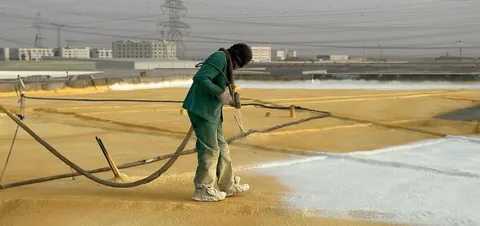
The correct fix: External waterproofing assessment and repair. This is not a DIY job and it is not a painting job. It requires a maintenance specialist to inspect the roof membrane, external wall coatings, and all penetration points around pipes, vents, and windows. In many Dubai buildings, this requires coordination with the building management.
If your building’s common areas or external walls are responsible for the moisture ingress into your apartment, you may have grounds to request that the building management arrange repairs — though this is a process that benefits from documentation and sometimes persistence.
Cause 4: Bathroom and Kitchen Moisture Vapour
Even without a plumbing leak, bathrooms and kitchens generate enormous amounts of moisture vapour during normal use. In Dubai homes where ventilation is inadequate — which describes a significant proportion of apartments across the city — this vapour condenses on walls and ceilings, slowly saturating the paint and the substrate over time.
What it looks like: Paint peeling primarily on bathroom ceilings and the upper portions of bathroom walls. Similar pattern sometimes seen in kitchens above the hob area. Often accompanied by surface mould — which appears as dark grey or black speckling under or on the paint film.
The correct fix: This is one case where the painting itself is part of the solution — but only with the right preparation and the right products. Bathroom ceilings and wet area walls require proper mould-resistant paint, applied to a properly prepared surface. Before repainting, any existing mould must be killed and removed (not painted over), the surface must be allowed to dry completely, and a specialist waterproofing primer should be applied before the topcoat.
Beyond painting, improving bathroom ventilation is essential. If your bathroom extractor fan is blocked, undersized, or discharging into the ceiling cavity rather than to the outside, you will have ongoing moisture issues regardless of how good the paint is. An electrical check of your extractor fan as part of a broader home maintenance visit is a sensible preventative step.
Cause 5: Poor Surface Preparation When Painted Previously
This cause is entirely human in origin — and extremely common in Dubai, where a large portion of the painting market operates informally, without proper trade certification or quality standards.
Good painting preparation involves:
- Removing all loose, cracking, and peeling paint from the existing surface
- Filling and sanding all cracks, holes, and surface imperfections
- Applying a correct primer appropriate for the surface type (new plaster, previously painted surfaces, and wet-area surfaces all need different primers)
- Allowing each coat — primer and paint — to dry fully before the next coat is applied
When a painter skips or shortcuts any of these steps — applying paint directly over dusty, contaminated, or previously failed surfaces — the new paint has no proper adhesion. In Dubai’s heat, a paint job applied to inadequately prepared surfaces may begin to fail within six months.
What it looks like: Peeling that often comes off in large sheets rather than small blisters. New paint lifting away with the old layers beneath it. Peeling that begins relatively soon after painting — within one year — without any apparent moisture source.
The correct fix: Full strip back to a sound substrate, correct surface preparation, appropriate primer, and high-quality topcoats designed for Dubai’s climate. Brands like Jotun, Dulux (Weathershield for exteriors), and Sigma Coatings produce UAE-specific formulations that account for the UV and heat load.
This is not a situation where a touch-up helps. Painting over poor adhesion means the new coat will fail along the same fault lines.
Cause 6: Structural Movement and Cracks
Dubai’s construction landscape means that buildings of varying ages and construction quality exist across the city. Some older buildings, and some built more quickly during boom periods, experience ongoing minor structural settlement — particularly at junction points where different materials meet.
When a structural crack moves, even fractionally, any paint film that bridges that crack will shear and peel along the crack line.
What it looks like: Paint peeling in linear patterns following crack lines — typically diagonal cracks from window and door corners, or horizontal cracks at floor and ceiling junctions. The cracks beneath may be hairline or wider.
The correct fix: Structural cracks need to be assessed before being repaired. A hairline crack in render is very different from a crack in a load-bearing element. For surface-level cracks, the correct repair involves cutting out the crack, filling with flexible filler, applying a reinforcing mesh tape, and then skimming, priming, and painting. Painting over an unfilled crack with flexible filler — rather than rigid filler — allows the surface to move slightly without re-cracking the paint.
A Diagnostic Checklist: What Is Your Peeling Paint Telling You?
Before calling anyone to fix peeling paint in your Dubai home, use this quick diagnosis:
Peeling near or below an AC unit → Check condensate drain line. Call AC maintenance first.
Peeling on ceiling or external-facing walls, worse after rain → Possible waterproofing failure. Needs specialist assessment.
Peeling adjacent to bathroom, kitchen, or plumbing wall → Possible hidden leak. Call a plumber before a painter.
Peeling in bathroom ceiling with dark spotting → Mould from moisture vapour. Check ventilation. Use specialist bathroom paint on next coat.
Peeling in large sheets exposing previous layers → Previous poor preparation. Full strip-back and redo required.
Peeling along linear crack patterns → Structural movement. Assess crack depth, use flexible filler, use flexible paint system.
Peeling uniformly across exterior surfaces → UV and heat degradation. Normal aging cycle. Use Dubai-rated exterior paint on repaint.
Frequently Asked Questions: Paint Peeling in Dubai
Q: Why does paint keep peeling in the same spot in my Dubai apartment?
Recurring peeling in the same location almost always indicates a persistent moisture source that has not been resolved. The most common causes in Dubai apartments are a slow plumbing leak in the adjacent wall, a blocked AC condensate drain line, or waterproofing failure from the unit above. Simply repainting without identifying and fixing the moisture source will always result in the problem returning.
Q: Is paint peeling in Dubai dangerous?
Paint peeling itself is not dangerous, but what causes it often is. Mould growth beneath peeling paint — common in humid or poorly ventilated Dubai bathrooms — can affect air quality. Structural cracks associated with paint peeling can indicate settlement issues that warrant inspection. Peeling near electrical fittings should be investigated as it may indicate moisture near wiring.
Q: How long should paint last in a Dubai apartment?
A properly prepared and painted interior surface in a Dubai apartment should last 5–8 years before requiring full repainting. Bathrooms and kitchens, where moisture exposure is higher, typically need repainting every 3–5 years. Exterior surfaces in Dubai’s UV environment typically need full repainting every 4–7 years depending on paint quality and aspect. Paint that fails significantly earlier than these timescales is almost always indicating either poor preparation, incorrect paint products, or an underlying moisture problem.
Q: Can I paint over peeling paint myself in Dubai?
You can, but it almost never produces a lasting result. Applying new paint over failing old paint without proper stripping and preparation simply transfers the adhesion failure to the new coat. If you want a repair that lasts, the old paint must be removed back to a sound surface, the cause of the peeling must be resolved, and the surface must be properly prepared before repainting. For small areas, this is DIY-possible with the right products. For anything larger, or where a moisture source is involved, professional assessment is worth the cost.
Q: How much does it cost to fix peeling paint in Dubai?
Cost depends on the underlying cause. If it is purely a painting issue requiring strip-back and repaint, a single room in a Dubai apartment typically costs AED 400–1,200 depending on size and ceiling height. If the cause is a plumbing repair, this adds AED 200–800 for the repair before painting. If waterproofing is involved, costs scale significantly — from AED 2,000 for a small area to AED 8,000+ for full roof or wall waterproofing.
How Green Grove Maintenance Approaches Paint Peeling
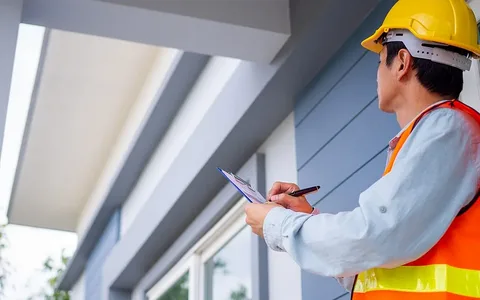
When a client contacts Green Grove Maintenance about peeling paint, our first step is never to send a painter. It is to send a maintenance specialist to assess the cause.
We check for moisture sources — plumbing, AC drainage, waterproofing — before recommending any repair. This means the repair we carry out addresses the actual problem, not just the visible symptom. Our clients do not call us back six months later with the same issue.
If the cause is a plumbing leak, our licensed plumbers fix it. If it is an AC drainage issue, our AC technicians clear and retest the drain line. If it is a waterproofing issue, we assess and quote for the membrane work. And once the underlying problem is resolved, our painters prepare the surface correctly and apply the right paint system for Dubai’s specific conditions.
This is home maintenance done properly — not just the surface, but the cause.
📞 Call or WhatsApp Green Grove Maintenance: +971 52 688 4258 🌐 greengrovemaintenance.com/booking 📍 Salsbeel Building, Office 104, Al Muteena Street, Deira, Dubai